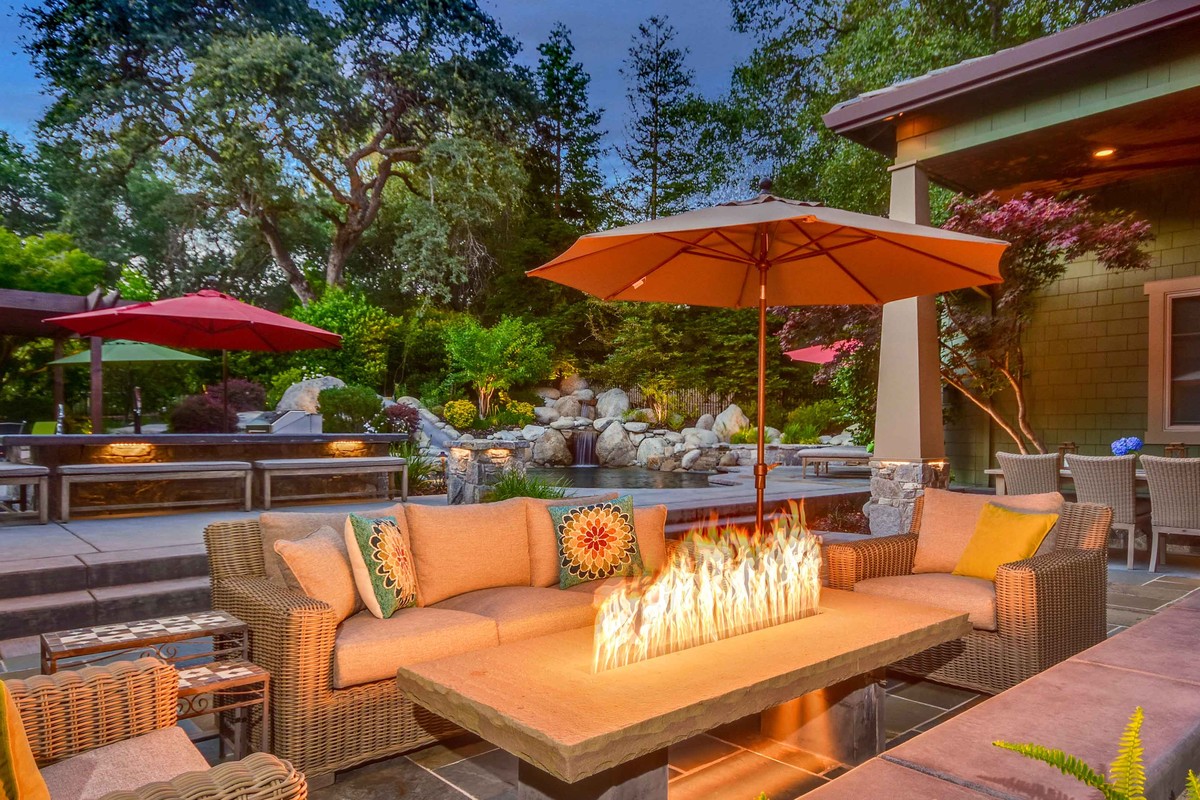
A successful backyard design is not a collection of well-chosen elements — it is a single, integrated outdoor environment in which every part supports every other part. Pools, living areas, planting, lighting, and hardscape do not exist as separate projects. They exist as one composition, and the quality of that composition is what determines whether a space feels genuinely finished or simply furnished.
Use is always the starting point. Before materials are selected or layouts sketched, the design team needs to understand how the space will actually be lived in. How many people does the household need to accommodate comfortably? Is the priority entertaining, family activities, relaxation, or some balance of all three? Is privacy more important than openness? These questions do not have generic answers, and designs that proceed without them tend to produce results that feel generic.
Spatial organization — how the space is divided, connected, and experienced as you move through it — is the invisible structure beneath everything else. The pool anchors the composition. The areas around it define the program: where people gather, where they dine, where they retreat. Transitions between these zones should feel natural and legible without requiring signage or explanation.
One of the most common failures in backyard design is the treatment of elements in isolation. A pool is designed, then decking is added, then furniture is placed, then planting fills the remaining gaps. The result looks assembled, because it was. Strong design works in the opposite direction: the composition is resolved as a whole first, then detailed into its parts.
Budget alignment shapes what is possible and must be addressed honestly from the beginning. A design that cannot be built as intended — because material costs were not validated or phasing was not considered — wastes the client's time and the design team's effort. The best backyard designs are those where the budget and the vision are reconciled before construction begins, not during it.
The result of this kind of thinking is a space that feels inevitable. Every element has a reason. Every transition makes sense. Nothing is left over, and nothing is missing. That is what a successful backyard design delivers — not just a beautiful space, but a complete one.
