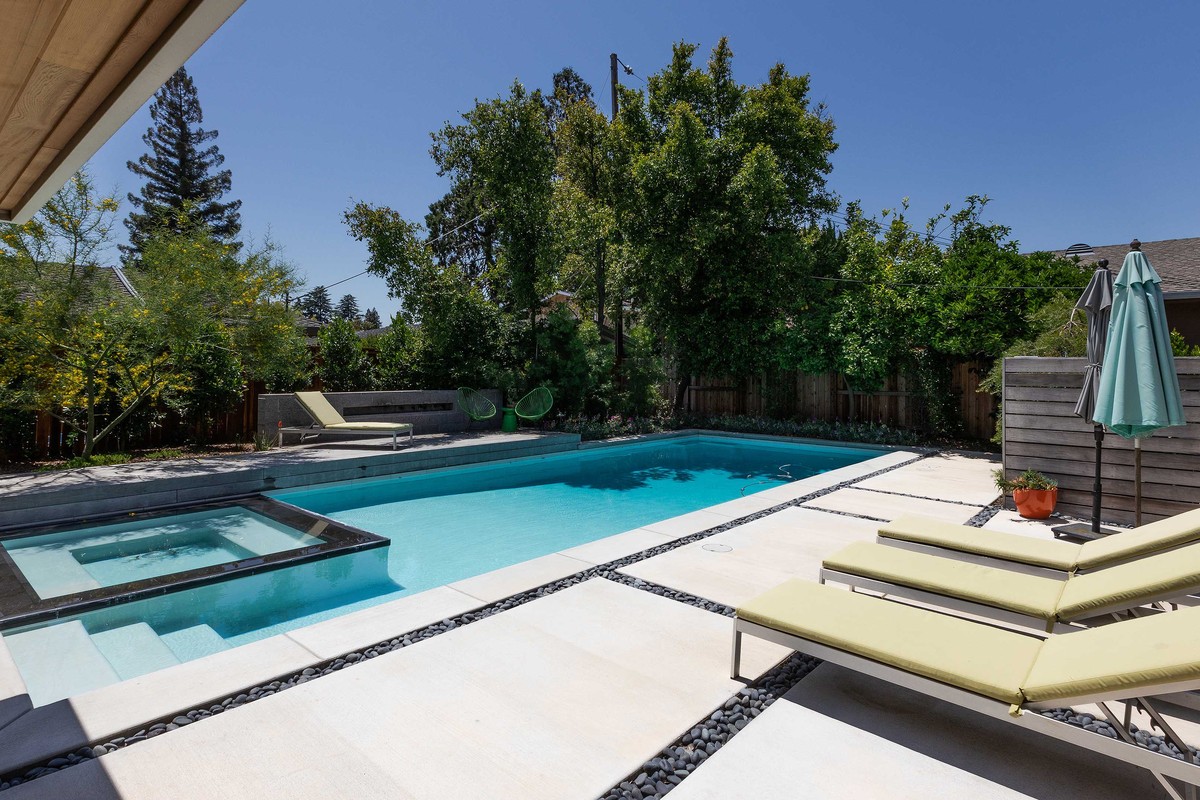
Building a residential swimming pool involves far more than design and construction decisions. Every project must comply with a detailed framework of local, state, and federal codes that govern safety, electrical systems, water management, and long-term operation. Understanding these requirements is not a step that happens at the end of the process — it is a foundation that shapes how the project is designed from the start.
Safety requirements form the core of most residential pool codes. In California, this typically means a 60-inch perimeter barrier with self-closing, self-latching gates — designed specifically to prevent unauthorized access, particularly by young children. Pool alarms and safety covers are also governed by code and must be factored into the design. These are not afterthoughts; they are elements that affect placement, layout, and the relationship between the pool and surrounding structures.
Electrical compliance is equally critical and equally complex. Bonding and grounding systems, GFCI protection, and safe distances between electrical components and the water's edge are all mandated by code. These requirements are not cosmetic — they exist because water and electricity are a dangerous combination, and the consequences of non-compliance can be severe. Planning for electrical systems early allows them to be integrated into the design naturally rather than retrofitted awkwardly.
Drain safety is another area governed by strict federal and state guidelines. Anti-entrapment requirements — including compliant drain cover specifications and suction system design — are not optional considerations. They must be addressed in the construction documents and verified during inspection.
One of the most common and costly mistakes on pool projects is treating code compliance as something to address later in the process. Code requirements affect grading, setbacks, equipment placement, fencing layout, and more. A project designed without code integration will almost always require revision — and revisions discovered during permitting or inspection are far more expensive than those resolved on paper.
When code is woven into the design from the beginning, the result is a project that moves through the approval process efficiently and inspects cleanly. More importantly, it produces a pool that is genuinely safe, properly built, and compliant for the long term.
